
CAT-6 COLOR CODE
l
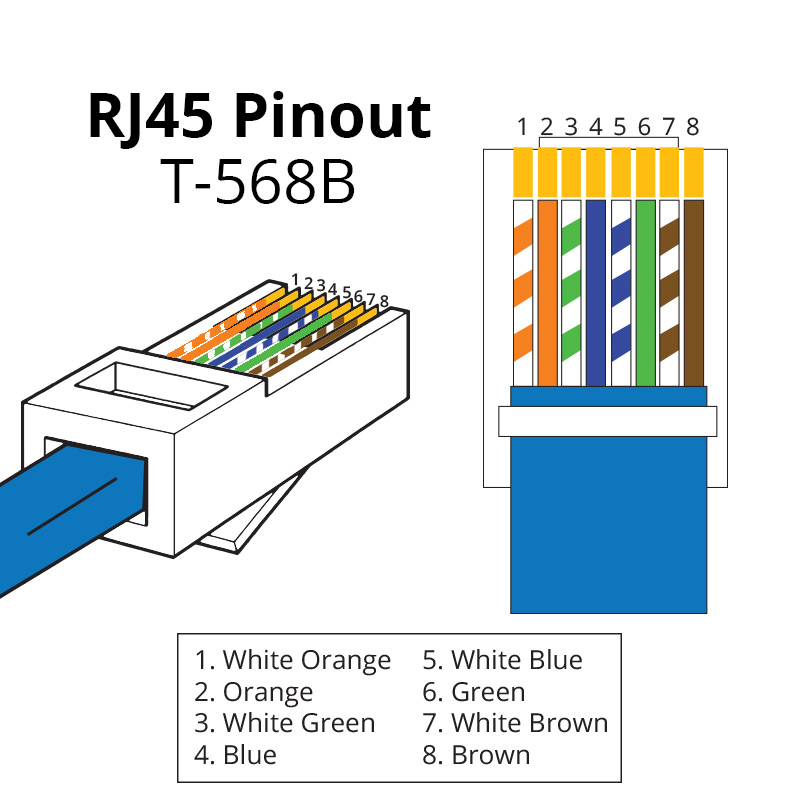
Cat6 cables are a staple in modern networking, providing reliable and high-speed data transmission. Understanding the role of each pair of wires within a Cat6 cable is essential for network engineers, IT professionals, and anyone interested in setting up or maintaining a robust network infrastructure. This article delves into the detailed functions of each pair of wires in a Cat6 cable and explains their significance in data transmission. Here’s a table summarizing the functions of each pair of wires in a Cat6 network cabling:
| Pair Number | Wire Colors | Pin Numbers | Function | Role in Ethernet | Role in PoE |
|---|---|---|---|---|---|
| Pair 1 | White/Orange and Orange | Pins 1 and 2 | Transmitting Data (Tx) | Sends data from the device to the network | Not typically used for PoE |
| Pair 2 | White/Green and Green | Pins 3 and 6 | Receiving Data (Rx) | Receives data from the network to the device | Not typically used for PoE |
| Pair 3 | White/Blue and Blue | Pins 4 and 5 | Additional Data Transmission and PoE | Part of bidirectional data in Gigabit Ethernet | Carries power for PoE applications |
| Pair 4 | White/Brown and Brown | Pins 7 and 8 | Additional Data Transmission and PoE | Part of bidirectional data in Gigabit Ethernet | Carries power for PoE applications |